The AI Speed Race: 296+ Models Released This Year — What It Means for You
If you feel like there is a new AI announcement every week, you are not imagining it. As of May 2026, the AI industry has released more than 296 distinct model versions from major organizations — and the pace is not slowing down. OpenAI alone has released several significant updates in the past few months, with its chief scientist stating that the last two years have actually been "surprisingly slow" compared to what is coming next.
For the average person trying to stay informed — or for a blogger, student, or business owner trying to make smart decisions about which AI tools to use — this pace of change is both exciting and overwhelming. In this post, we cut through the noise and explain what the current AI model landscape actually looks like, who the key players are, and how to make sense of it all.
Why Are There So Many Models?
The explosion in model releases reflects a fundamental shift in how AI is developed. A few years ago, releasing a major AI model required months of work and enormous resources — something only a handful of organizations in the world could do. Today, the combination of better training techniques, open-source foundations, and widely available cloud computing has made it possible for dozens of organizations to release competitive models regularly.
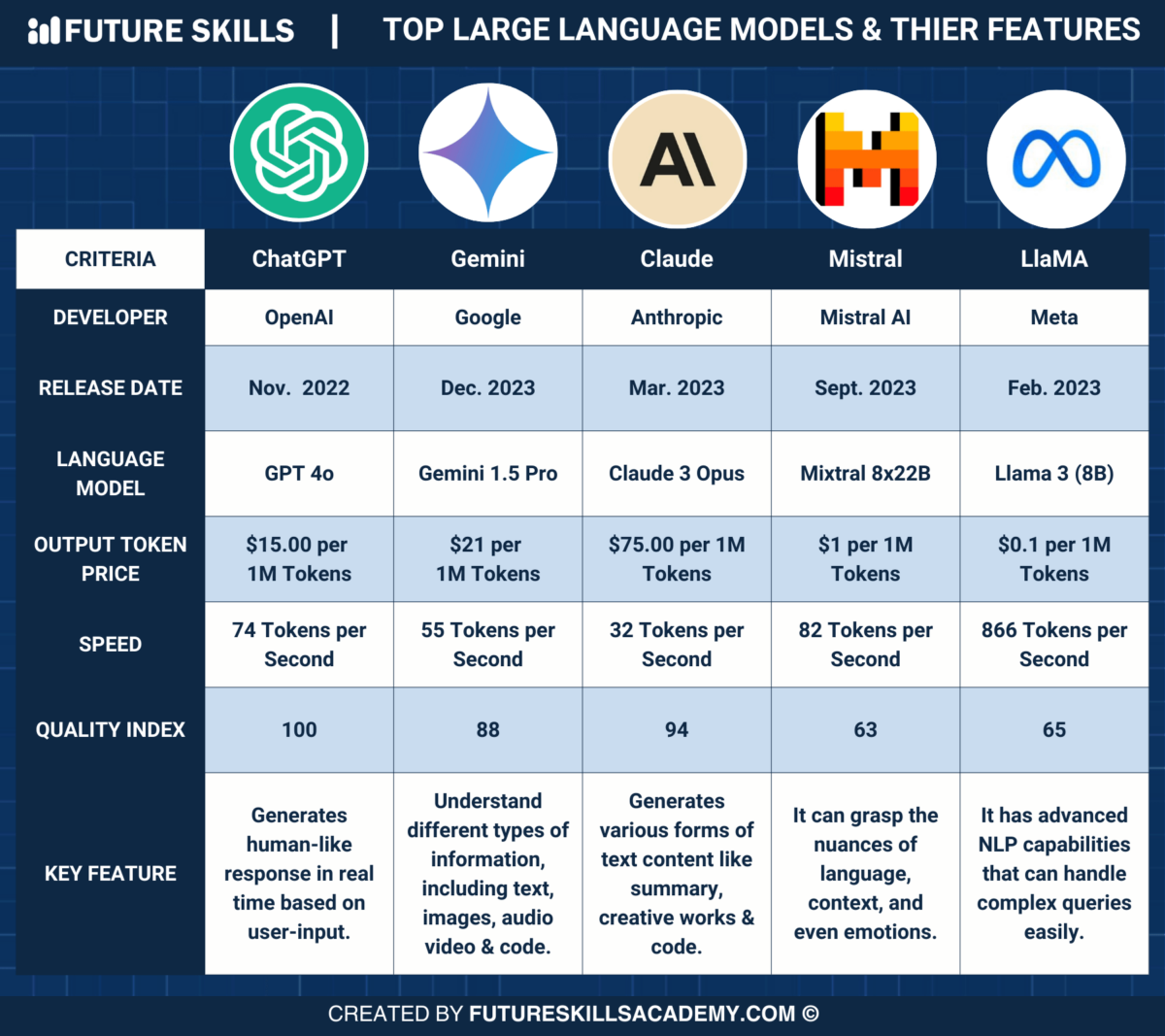
The organizations driving the most releases right now include OpenAI, Anthropic, Google DeepMind, Meta AI, Mistral AI, xAI (Elon Musk's AI company), DeepSeek, Alibaba's Qwen team, and ByteDance. Each has its own strengths, pricing models, and philosophical approaches to AI safety and openness.
🔹 OpenAI (GPT-5.5): Best for agentic coding and computer use tasks
🔹 Anthropic (Claude Opus 4.7): Best for nuanced writing, analysis, and safety-conscious applications
🔹 Google (Gemini 3): Best for search integration, multimodal tasks, and in-device AI
🔹 DeepSeek V4: Best for open-source flexibility and cost-sensitive developer use cases
🔹 Meta AI (Llama series): Best for developers who want to self-host and fine-tune models
The Open vs. Closed Divide
One of the most important distinctions in today's AI landscape is between open-source and closed models. Open models — like Meta's Llama series, Mistral's models, and DeepSeek V4 — can be downloaded, modified, and run on your own hardware. Closed models — like GPT-5.5, Claude Opus 4.7, and Gemini — are only accessible through paid APIs or consumer products, and the underlying model weights are kept private.
For most everyday users, this distinction does not matter much. You access both types through chat interfaces that look similar. For developers and businesses, however, it matters enormously. Open models offer control, privacy, and cost savings. Closed models typically offer more polished performance and easier deployment without needing to manage your own infrastructure.
What Is Reasoning Mode — And Do You Need It?
One of the most talked-about features in 2026 AI models is "reasoning mode" — sometimes called Thinking mode or Extended Thinking. This is a setting where the model spends extra time working through a problem step by step before giving you an answer, similar to how a human might pause and think carefully before responding to a difficult question.
Reasoning mode produces noticeably better results on complex, multi-step problems — like difficult math, coding challenges, strategic planning, and research synthesis. The trade-off is that it is slower and uses more computing resources, which on paid plans translates to higher costs. For simple tasks — answering a factual question or drafting a short email — standard mode works perfectly well and is much faster.
How to Decide Which AI to Use
With so many options available, the decision can feel paralyzing. Here is a practical framework:
- What is the task? Match the model to the job. Use a coding-focused model for development, a writing-focused model for content, and a research-focused model for analysis.
- How sensitive is the data? If you are working with private business information, consider an open-source model you can run locally rather than sending data to a third-party cloud service.
- What is your budget? Free tiers exist for most major models, but meaningful capabilities often require a paid plan. GPT-5.3 is the default free option on ChatGPT; DeepSeek V4 is free and open source for developers.
- Do you need it to take actions? If you want an agent that can browse the web, run code, or interact with software — not just answer questions — you need a model with strong agentic capabilities. GPT-5.5 and Claude are both strong here.
The Honest Reality
The AI model race benefits users in the short term — more competition drives better performance and lower prices. But it also creates real challenges: the tools change faster than most people can keep up with, it is harder to build reliable workflows on top of rapidly changing foundations, and the environmental cost of training and running hundreds of models at scale is substantial.
The smartest approach for most people is to pick one or two tools that fit their main use cases, learn them deeply, and follow the news to know when a genuinely important shift happens — rather than chasing every new release.


Comments
Post a Comment