DeepSeek V4 Is Out — And the AI Race Between China and the US Just Got Hotter
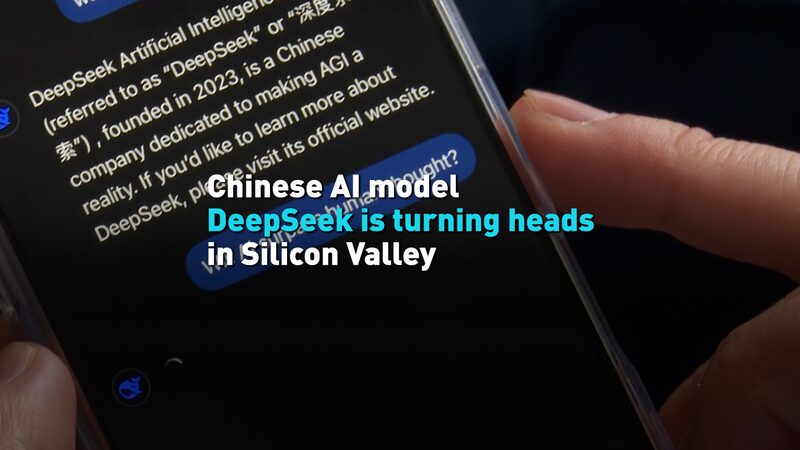
Remember January 2025, when a little-known Chinese AI company called DeepSeek released a model that rattled Silicon Valley and sent tech stocks tumbling? That moment, later dubbed the "DeepSeek moment," showed the world that top-tier AI did not have to come from American labs with billion-dollar budgets. In late April 2026, DeepSeek is back — and the AI world is watching closely again.
The company has released a preview of its new flagship model, DeepSeek V4, and while the reaction has been more measured this time around, the technology behind it is genuinely impressive and carries important implications for developers, businesses, and anyone who follows the global AI race.
What Is DeepSeek V4?
DeepSeek V4 comes in two versions: V4-Pro and V4-Flash. The Pro version is a Mixture-of-Experts model with 1.6 trillion parameters — though in practice only 49 billion of those are active at any given moment, which is how the model stays efficient despite its enormous overall size. The Flash version is smaller and faster, with 284 billion parameters and 13 billion active at inference time.
Both versions support a context window of one million tokens — a massive leap that allows users to feed in entire codebases, long legal documents, or books as a single prompt without information being cut off. This makes V4 particularly powerful for research, legal analysis, and software development tasks.
What Makes V4 Different From Previous DeepSeek Models?
DeepSeek's engineers introduced several architectural improvements that set V4 apart. The most notable is a new Hybrid Attention Architecture that combines two complementary methods for handling long text: one that compresses recent context efficiently, and another that stores compact summaries of very distant information. The result is that the model can "remember" details from millions of tokens ago without the enormous computational cost that usually comes with that capability.
In practical terms, this means you could paste in a 500-page legal document or an entire software repository and ask V4 to analyze specific sections, identify contradictions, or suggest improvements — and it would actually do so accurately, rather than forgetting what was at the beginning of the document by the time it reaches the end.
Who Is It For — And Is It Free?
Like DeepSeek's previous models, V4 is open source under the MIT license. This means developers can download it, run it on their own hardware, modify it, and build products on top of it — at no cost. This open approach is a deliberate strategy that sets DeepSeek apart from American counterparts like OpenAI and Anthropic, whose most capable models are only available through paid APIs.
For the average user who just wants to try it, V4 is available on DeepSeek's website and app. For developers and businesses wanting to integrate it into their own products, the model weights are freely downloadable from Hugging Face, where it had already been downloaded hundreds of thousands of times within days of release.
How Good Is It, Really?
DeepSeek claims V4 achieves world-class performance in coding benchmarks and "top-tier" reasoning ability. Independent evaluation by the US government's National Institute of Standards and Technology found that DeepSeek V4's capabilities trail the current American AI frontier by roughly 8 months — impressive, but not quite at the level of the most recent GPT or Claude models. Analysts note, however, that V4 is significantly more cost-efficient than comparable American models, ranging from 53% cheaper to 41% more expensive depending on the task, with the majority of workloads landing on the cheaper end.
The Geopolitical Angle
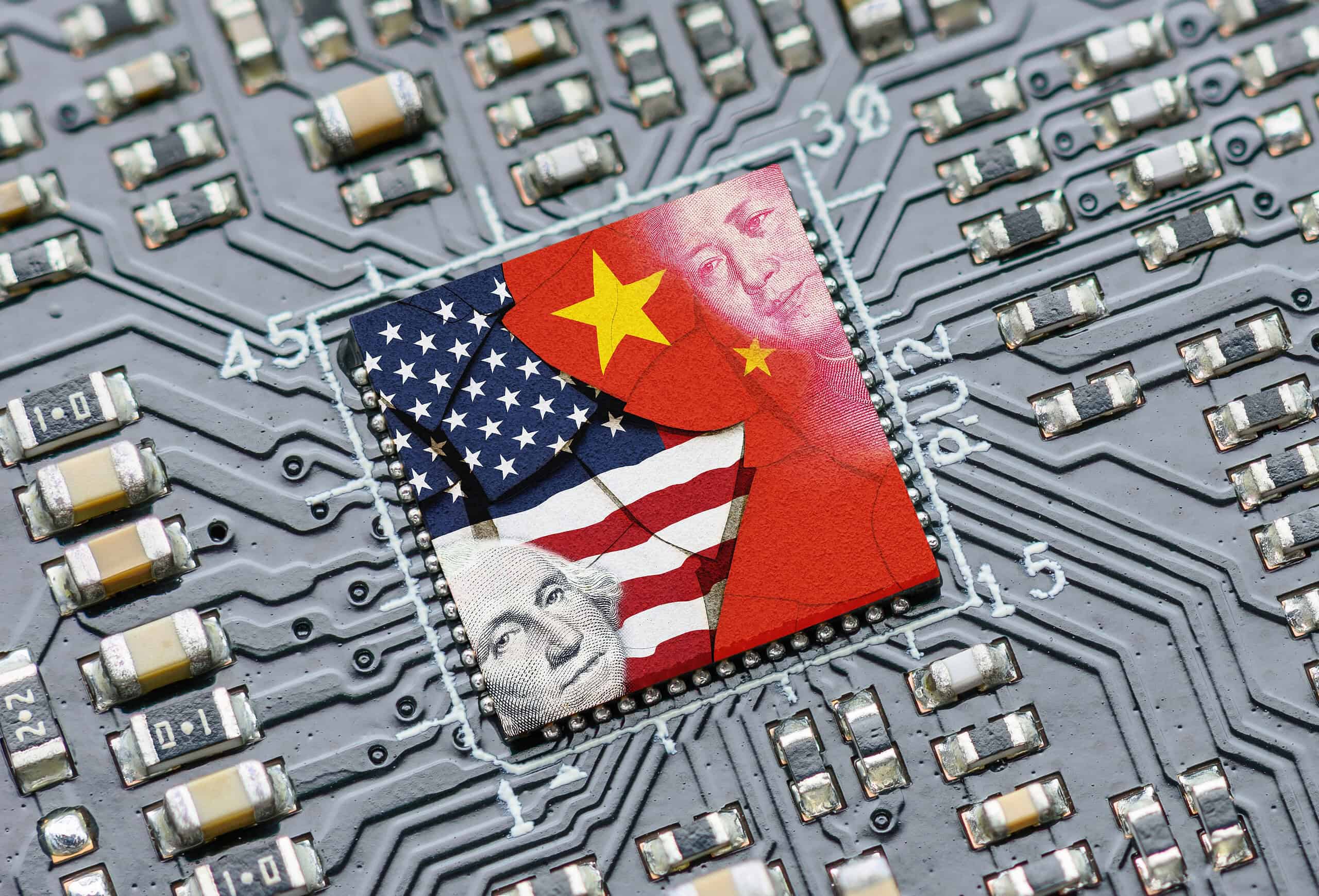
V4's release is notable for one additional reason: it is the first DeepSeek model confirmed to run on domestic Chinese chips from Huawei, rather than on Nvidia hardware. Since Washington has placed export restrictions on advanced AI chips to China, developing a world-class model that runs on locally made chips is a significant milestone for Chinese AI sovereignty. Analysts suggest this could accelerate AI adoption across China and reduce the country's dependence on American semiconductor supply chains.
Not everyone is cheering. Both OpenAI and Anthropic have previously accused DeepSeek of improperly extracting capabilities from their models through a technique called distillation. A White House official recently raised similar concerns about foreign entities conducting industrial-scale campaigns to extract knowledge from US AI systems — though DeepSeek was not named directly.
What Should You Take From This?
For developers and small businesses, DeepSeek V4's open-source nature and cost efficiency make it worth serious consideration. You can run a genuinely powerful AI model on your own infrastructure, maintain data privacy, and pay nothing for the model itself. That is a compelling value proposition for anyone building AI-powered tools on a budget.


Comments
Post a Comment