How Students Can Use AI to Study Smarter in 2026 — Without Getting in Trouble
Every student in 2026 is navigating the same confusing landscape: AI is everywhere, your teachers have mixed feelings about it, your institution may have unclear policies, and you genuinely are not sure where the line is between using AI as a tool and using AI as a shortcut that hurts your learning. This post cuts through that confusion with a clear, honest framework for using AI to study better — not to replace your thinking, but to sharpen it.

What AI is Genuinely Great For (Safe and Beneficial)
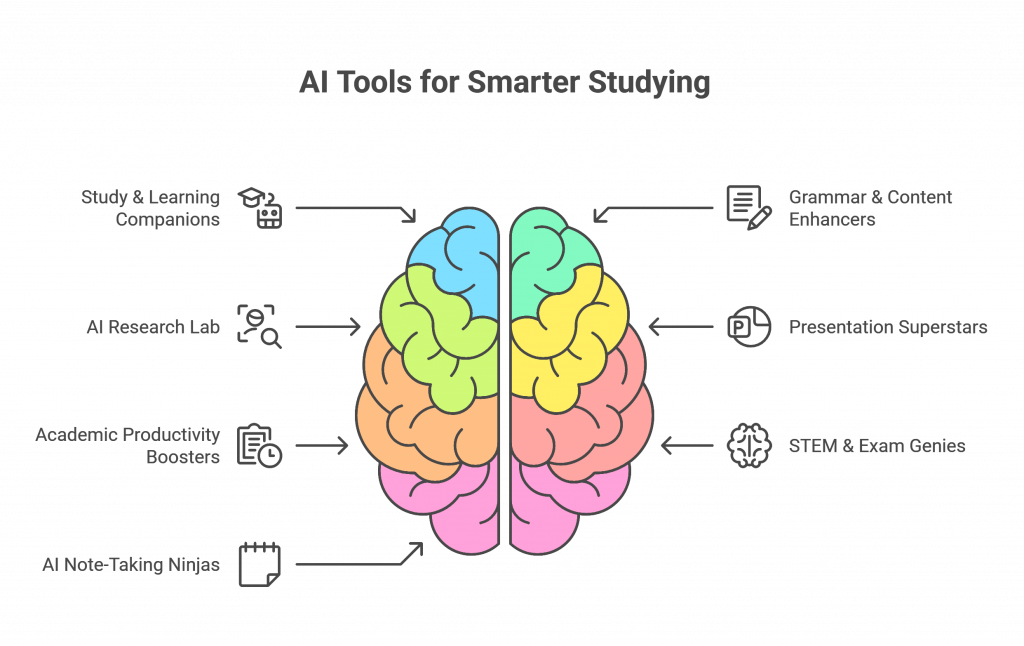
- Explaining difficult concepts in simpler language. Paste a confusing paragraph from your textbook into ChatGPT or Claude and ask it to explain it like you are 16. This is one of the highest-value uses of AI for learning and is unambiguously acceptable in any educational setting.
- Generating practice questions. Tell AI the topic you are studying and ask it to create 10 exam-style questions. Then answer them yourself without AI help. This kind of retrieval practice is one of the most research-backed study methods available.
- Checking your understanding. Write your own explanation of a topic, then ask AI if it is correct and what you missed. This confirms what you know and identifies gaps without handing you someone else's work.
- Research starting point. Use AI to get a quick overview of a topic before going to your textbooks and proper academic sources. Think of it as a conversation starter that orients you, not a source you can cite.
- Grammar and clarity checks on your own writing. Submitting work you wrote yourself but asking AI to improve grammar and sentence clarity is generally acceptable — and teaches you better writing over time.
Google's NotebookLM — A Game Changer for Students
One of the best free AI tools for students in 2026 is Google's NotebookLM. You upload your own study materials — lecture slides, textbook PDFs, notes — and the AI becomes an expert on exactly those materials. You can ask it questions about your own content, get it to generate study guides, create flashcard prompts, or summarise the key themes from three different sources side by side. Crucially, because it is working from your materials, it is helping you learn your specific content rather than generating generic content from the internet.
The Line You Should Not Cross
The line is clear: using AI to generate work that you submit as your own original thinking is academic dishonesty. This applies to essays, reports, creative writing, code assignments, and any other task where the thinking process is the learning objective. Beyond the ethical problem, there is a practical one — the students who rely on AI to do their intellectual work for them arrive at exams, job interviews, and career challenges unable to perform, because they practised bypassing understanding rather than building it.
What to Do When Your Institution's Policy Is Unclear
If your school or university has not yet published a clear AI policy — which is still the case for many institutions in 2026 — the safest approach is to ask your individual teacher or professor directly. Frame it as a genuine question: "I want to use AI as a study tool to help me understand the material better. Is there a way you are comfortable with me doing that for this assignment?" Most educators appreciate students who approach this transparently and will give you a clear answer you can rely on.



Comments
Post a Comment